|
|
|
Healthcare Provider Antiretroviral Drug Access Initiative
Program Overview
The HIV epidemic in Zimbabwe ranks among the worst in the world, with an adult HIV prevalence rate of 24%. Not unlike in other developing countries however, the HIV epidemic disproportionately affects people between the ages of 20 and 40. The people in these age groups are the ones who must shoulder their countries’ economies for decades to come. Numerous reports have highlighted the resulting shortage of professionals such as teachers and healthcare workers.
Zimbabwe has approximately 11,000 healthcare professionals, many of whom are infected with HIV/AIDS. While some health workers are able to pay for antiretroviral therapy, the majority cannot afford the cost which ultimately leads to a significant mortality rate. In addition, in their search for access to healthcare, many healthcare providers migrate from Zimbabwe, leaving an ever-larger gap in local healthcare services. As a result, healthcare services are becoming increasingly scarce in Zimbabwe.
In an effort to reduce attrition, our Healthcare Provider Antiretroviral Drug Access Initiative provides antiretroviral treatment to healthcare workers who are unable to pay for medication. The program’s premise is that if treatment is provided locally, retention of healthcare workers will improve, which will be beneficial for the health of the entire community. The Initiative is an international collaboration between the University of Harare in Zimbabwe, Brown University Medical School, The Miriam Hospital of Rhode Island and ICEHA.
Results: Funds became available to procure ARV therapy for 10 individuals per year commencing in January 2003. By December, 2003, generic ARV drug supplies had been procured and 5 HIV-infected healthcare workers had been screened. To date, however, despite active efforts to recruit participants, only 4 individuals have been admitted to the program and provided with ARV therapy. Those individuals are doing well and are back at work. Information collected to date indicates that enrollment of HIV-infected healthcare providers into the program has been hampered by stigma, fear of disclosure of HIV status and job loss, program publicity and the possible impact on the reputation of the hospital.
The results of the pilot phase of the program were presented at the International AIDS conference in Bangkok, July 2004. To view the abstract, click here.
Decentralization of HIV Care into Rural Areas
Abidjan, Côte d'Ivoire
Program Overview
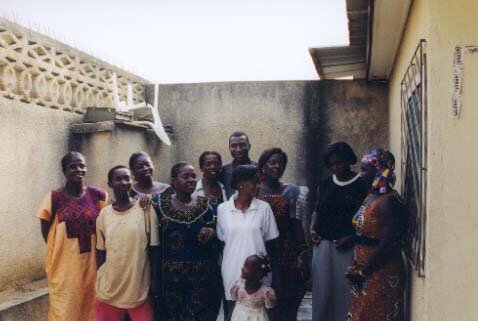
This program is an international collaboration between the Centre des Maladies Infectieuses at the University of Treichville in Abidjan, Côte d’Ivoire and ICEHA. The program’s aim is to increase the number of HIV-infected patients treated, improve their quality of life and family situations, and protect the not-yet-infected population.
There are more than one million HIV-positive people in Côte d’Ivoire, yet only slightly over 4,000 patients are receiving antiretroviral (ARV) therapy. Although the cost of medication is a significant factor, other resource constraints also limit the number of people treated. Currently, there are only eight centers in the country that have been accredited to prescribe ARV therapy and monitor HIV-infected patients. These centers tend to be in the major cities and have a limited number of staff. Several other city clinics offer Voluntary Counseling and Testing (VCT) services and prevention of Mother-to-Child Transmission (pMTCT) programs, yet the stigma associated with being HIV-positive limits the number of women and children benefiting from these programs and creates very difficult family circumstances for the women who do decide to participate. Providing community-based healthcare workers with the expertise to address the HIV problem effectively brings disease awareness and “disease-care” into the communities.
The first phase of this program was completed in October 2002. It enabled the two top HIV/AIDS experts in the country to receive in-depth HIV training in best clinical practices at University of California, San Francisco and Cornell University in New York. The next phase consists of decentralization of HIV care for 20,000 HIV-infected patients, making HIV treatment and prevention available in the communities by enabling community workers to provide care and prevention services. However, due to the current political unrest, this program is temporarily on hold.
|
|
ICEHA's Programs

HIV/AIDS Healthcare Capacity Building:
Clinical mentoring on HIV/AIDS care and antiretroviral medication at referral hospitals in Cambodian provinces
Local Partner Organization
The National Center for HIV/AIDS, Dermatology, and STDs (NCHADS)
Family Health International Cambodia
Program Overview
At the request of, and in close collaboration with, the National Center for HIV/AIDS, Dermatology, and STDs in Cambodia (NCHADS), ICEHA is providing clinical mentoring to healthcare providers at the provincial referral hospitals in Cambodia, leading to HIV treatment and care for all HIV-infected patients in the country.
For years the Ministry of Health in Cambodia has orchestrated effective HIV prevention programs. By mid-2004 funding for making antiretroviral (ARV) medication available through the public sector was obtained by the Cambodian government. Even though the limited number of existing local physicians received didactic ART training, it was felt that didactic training does not give them the confidence or competence to deliver good HIV care in their practice. Hence NCHADS approached ICEHA with a request for clinical mentors. There has been a significant uptake of ART under guidance by ICEHA’s clinical mentors. In the past 18 months, Cambodia, which does not receive funding through PEPFAR but does receive funding from the Global Fund, managed to put 10,500 AIDS patients on treatment through its public healthcare infrastructure. Some of the clinics were set up with as little as $1,000 and yet had 100 patients on antiretroviral treatment within the first month.
Achievements
- ICEHA's first clinical mentor volunteers arrived in Cambodia in September 2004.
- In the first year of the program, dozens of local health providers at clinics around the country received one-on-one mentoring.
- In 2006 and 2007, the program moved to the next stage in which Western clinical mentors worked with local HIV experts to provide training throughout the country.
Clinical Mentorship Program
Local Partner Organization
The Clinton Foundation HIV/AIDS Initiative
Ethiopia Federal Ministry of Health
Program Overview
This project supports the Ethiopian Federal Ministry of Health's efforts to expand access to adult and pediatric care and treatment to the more than 223,000 adults and 63,000 children estimated to be in need of antiretroviral treatment (ART). Currently the dearth of human resources is one of the greatest constraints to rapidly scale up HIV/AIDS care and treatment. To meet the current and growing demand for services, health care workers across the country must be quickly and effectively trained to care for people living with HIV/AIDS. While local caregivers have received didactic training in HIV care, ICEHA clinical mentors will help them to translate theoretical knowledge into practical clinical skills.
Clinical Mentoring for HIV Care and Delivery of ARV Drugs
Local Partner Organization
The Clinton Foundation HIV/AIDS Initiative
Lesotho Ministry of Health and Social Welfare
Program Overview
As part of a comprehensive effort by Lesotho’s 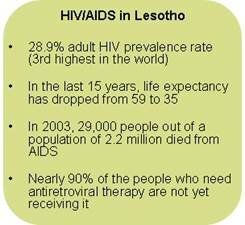 Ministry of Health and Social Welfare (MOHSW) to combat HIV/AIDS, ICEHA is partnering with The Clinton Foundation to provide clinical mentoring to health care workers in the public healthcare system. Ministry of Health and Social Welfare (MOHSW) to combat HIV/AIDS, ICEHA is partnering with The Clinton Foundation to provide clinical mentoring to health care workers in the public healthcare system.
In order to be able to roll out antiretroviral treatment (ART) programs, the STI/HIV/AIDS Directorate in Lesotho has organized several didactic trainings in HIV care and treatment for local healthcare workers. However, practical on-site training in the provision of HIV care (including ART) is an essential component that is still needed.
ICEHA volunteers are providing this hands-on training. HIV physicians and/or nurses (with the possible addition of pharmacists and social workers) are stationed at each site to provide hands-on clinical mentoring and advanced didactic training for local staff.
Achievements
- ICEHA’s first clinical mentors arrived in November 2005.
- By the end of 2006, 36 ICEHA clinical mentor volunteers had provided clinical mentoring to their colleagues in Lesotho.
- In the 13 months ICEHA clinical mentors were in Lesotho, 335 healthcare workers were trained in 24 clinic sites.
Clinical Mentoring in HIV/AIDS Care and Treatment
Local Partner Organization
The Clinton Foundation HIV/AIDS Initiative
Rwanda Treatment and Research AIDS Center
Program Overview
This program supports the Government of Rwanda’s efforts to train health care workers in HIV management, including adult and pediatric antiretroviral treatment (ART). In Rwanda, the lack of human resources is one of the greatest constraints to rapid scale up of the HIV/AIDS care and treatment program, particularly for pediatric HIV/AIDS care and treatment.
Local healthcare workers are currently receiving theoretical trainings in HIV care and treatment. However, practical on-site coaching is an essential component if didactic knowledge is to be translated into clinical skills. ICEHA clinical mentor teams will be placed at District Hospitals and Health Centers throughout the country to provide this hands-on coaching, including recognition of HIV positive patients, opportunistic infections, management of ART, and psychosocial issues.
Initiative to Strengthen the Nursing Training Programs
Local Partner Organization
Ministry of Health, Suriname
COVAB (the central training school for nurses)
Program Overview
The Government of Suriname has adopted a public health approach to HIV/AIDS care and has integrated HIV care into the primary care system. While this approach is effective, it also requires that all health workers are sufficiently educated and trained in HIV/AIDS care. In order to achieve this, the Ministry of Health and COVAB (the central training school for nurses) have invited ICEHA nurse clinical mentors to provide hands-on, practical HIV/AIDS training to the local nurses who will be teaching undergraduate nursing students. ICEHA clinical mentors will be providing a combination of didactic and clinical mentoring training on HIV/AIDS.
Achievements
- ICEHA's first clinical mentor volunteers arrived in Suriname in October 2007.
- Within 4 weeks, extensive training was provided to local nurses who then served as teachers to undergraduate students.
Zimbabwe
|
|
|